Figma Low-Fidelity Prototype
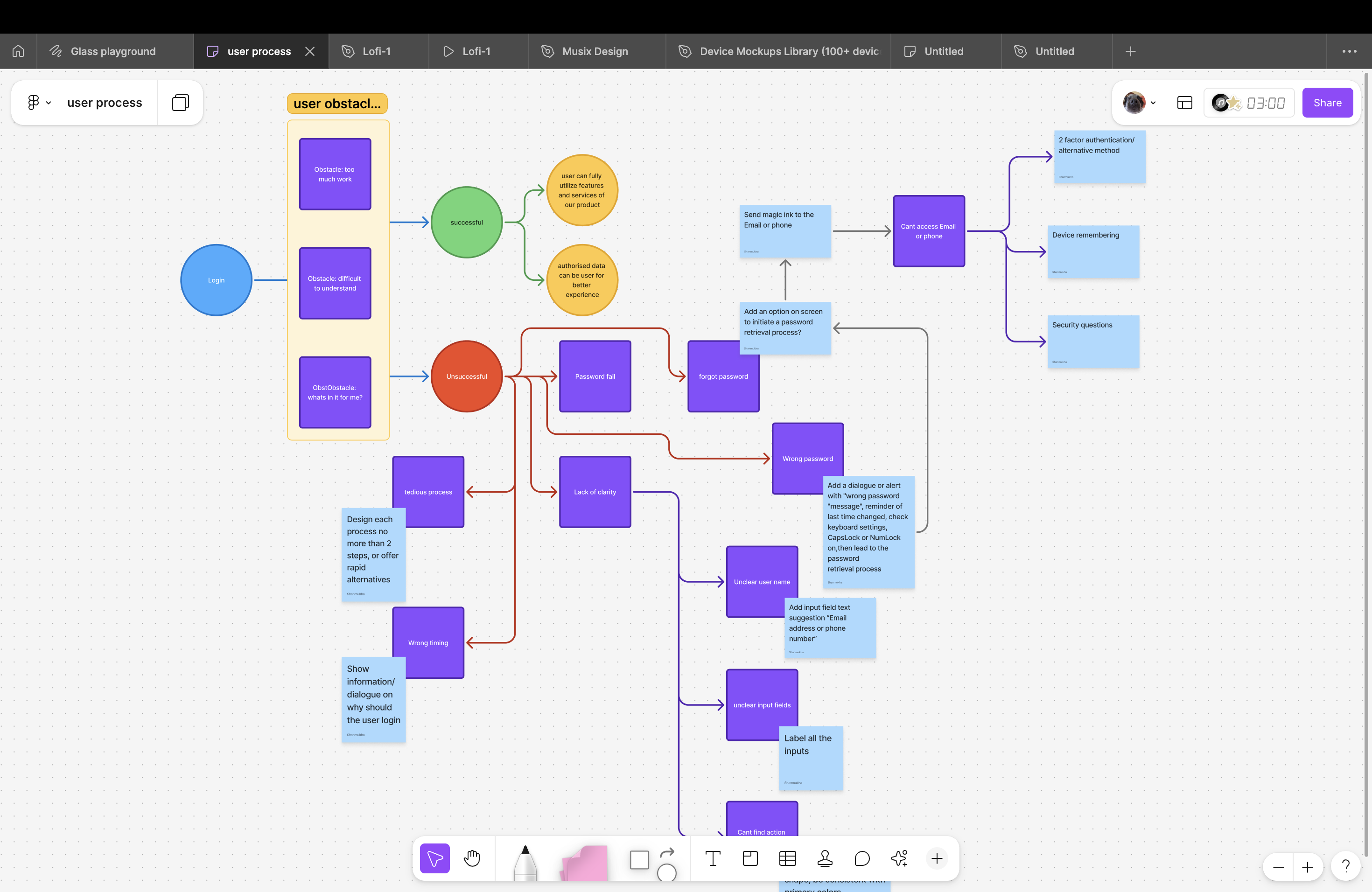
A complete low-fidelity prototype created in Figma, mapping user processes, identifying obstacles, and designing an interactive login flow.
The Challenge
Users often face friction during login and navigation processes due to unclear flows, inconsistent layouts, or poor error handling. Without clear process mapping, design gaps remain hidden until late in development, causing usability issues.
The Goal
The objective was to create a low-fidelity prototype that visualized user flows early, exposed potential obstacles, and incorporated UX best practices. The focus was on building a strong foundation for usability before moving into high-fidelity design.
The Approach
Discovery & Planning
I analyzed common login and navigation pain points, mapping the user journey from entry to task completion. Key friction areas like unclear error states and inconsistent button placement were identified.
Design & Prototyping
Using Figma, I designed a low-fidelity prototype focusing on simplicity and clarity. Interactive flows were created for the login process, navigation, and error handling. The design prioritized usability principles such as consistency, hierarchy, and minimalism.
Iteration & Feedback
The prototype was tested with sample user flows to validate clarity and efficiency. Adjustments were made to improve error messaging and align navigation with user expectations.
Key Features
Interactive Login Flow
A clickable low-fidelity flow showing input, error states, and successful login.
Process Mapping
Clear user journey mapping to highlight decision points and friction areas.
Obstacle Identification
Pinpointed usability challenges before high-fidelity design began.
UX Best Practices
Simplified navigation, consistent layouts, and improved error handling.
Scalable Foundation
A structure ready for high-fidelity design and eventual development.
The Result
The prototype provided a clear visualization of the login and navigation process, ensuring usability issues were addressed early. It became a blueprint for transitioning into high-fidelity design with fewer revisions.
What I Learned
This project reinforced the importance of low-fidelity prototyping in the UX process. I learned how early mapping of user flows reduces costly errors later and how interactive prototypes communicate design intent more effectively than static wireframes.